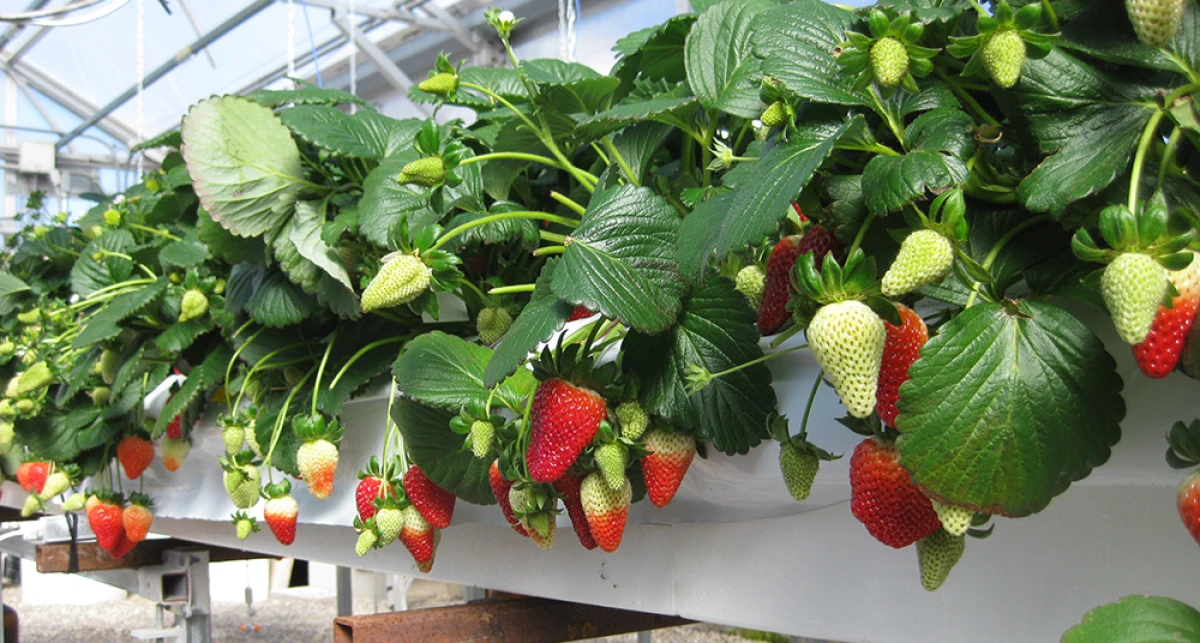
Maximum yield in minimum space
Vertical Gardening: Up the Walls
Vertical gardening is the perfect solution for small greenhouses because it makes use of unused space – the walls. Instead of plants stretching along the ground, they grow upwards, creating “living walls” of greenery, vegetables or flowers.
Why choose vertical gardening?
- Space efficiency: This is an obvious benefit. You can grow many times more plants in the same floor space.
- Easy maintenance: Plants are easily accessible, and weeding is often unnecessary.
- Aesthetics: Vertical gardens look amazing and can turn your greenhouse into a real oasis.
- Improved air circulation: With the right technology, the arrangement of plants in individual pots or “racks” promotes better air flow around the plants, reducing the risk of disease.
How to implement it in your greenhouse?
- Vertical Shelves and Racks: Use tiered shelves or special vertical stands that can accommodate multiple plants.
- Pocket Systems: Fabric or felt panels with pockets are popular for planting smaller plants, such as herbs, lettuce, or strawberries.
- Nets and Trellises: For climbing plants, such as cucumbers, beans, or even small pumpkins, provide support nets or trellises that they can climb up.
- Recycled Materials: Get creative! Use old pallets (of course, don’t forget to disinfect them before use), plastic bottles, or PVC pipes to create your own vertical systems.
What to Grow Vertically?
Light and compact plants are best suited: lettuce, spinach, chard, herbs (basil, mint, thyme), strawberries, small cucumbers, tomatoes (cherry tomatoes), beans, peas.
Hydroponics: Soilless Growing
Hydroponics is a method in which plants are grown in nutrient-rich water without soil. It is a fairly efficient method that allows you to save water and maximize yields, because plants, through agronomically correct recipes, receive exactly the nutrients they need, in optimal concentrations.
Why choose hydroponics?
- Faster growth: Plants grow up to 30-50% faster than in traditional soil, because nutrients are readily available.
- Less water consumption: Hydroponic systems use up to 90% less water than soil-based gardening, because the water is recirculated.
- No weeds: Since there is no soil, weeds simply do not exist.
- Fewer diseases and pests: Plants grown in a sterile environment are less susceptible to soil-borne diseases and pests.
- Higher yields: Thanks to optimal conditions, hydroponics provides a relatively higher yield from each plant.
Types of hydroponic systems for small greenhouses:
- Deep Water Culture (DWC): The roots of the plants are immersed in a nutrient solution. An aeration system is required to provide oxygen to the roots. A simple and inexpensive system for beginners.
- Nutrient Layer Technique (NFT): A thin layer of nutrient solution flows continuously through channels where the plant roots absorb it. An efficient and compact system.
- Drip systems: The nutrient solution is supplied to each plant individually through drippers. Suitable for larger plants.
What to grow hydroponically?
Leafy vegetables and plants with shallow roots will do best: lettuce (various varieties), spinach, arugula, herbs (basil, oregano, thyme), strawberries, tomatoes, cucumbers, peppers.
Aquaponics: Fish and Plants in Symbiosis
Aquaponics is the future of gardening, combining aquaculture (fish farming) and hydroponics. It is a closed system in which fish waste is processed into nutrients that are useful for plants. The fish provide fertilizer, and the plants purify the water for the fish. It is a delightful example of symbiosis that offers a double harvest – both vegetables and fish.
Why choose aquaponics?
- Two harvests from one system: You grow both plants and fish, making the most of your space and resources.
- Water savings: Aquaponics systems use very little water because it is constantly recirculated.
- Sustainability: It is a natural and environmentally friendly system that does not contain chemicals.
- No waste: Fish waste is used to feed the plants, creating an efficient cycle.
- Less work: Once the system is set up and balanced, it requires minimal intervention.
Basic elements of an aquaponics system:
- Fish tank: Where fish are raised (most often tilapia, carp, catfish).
- Biofilter: Bacteria convert ammonia from fish into nitrates that are useful to plants.
- Plant growing area: Can be hydroponic-style systems (e.g. float systems or drip systems).
What to grow in aquaponics?
Leafy vegetables (lettuce, spinach, arugula), herbs, peppers, tomatoes, cucumbers, strawberries grow great in aquaponics. In Latvian conditions, tilapia (heating is required in winter), bream or even whitefish can be considered, if suitable conditions are provided.
Integrated solutions and tips for maximum yield
To achieve maximum yield in your small greenhouse, it is often best to integrate several methods. For example, you can use vertical gardening along the walls of the greenhouse, while installing a hydroponic or aquaponics system at floor level.
Additional tips:
- Lighting: Provide sufficient lighting. In the latitudes of Latvia, additional artificial lighting may be necessary during the winter months (LED grow lights with a spectrum adapted to the selected crops).
- Ventilation: Good air circulation is essential to prevent diseases and maintain optimal temperatures.
- Temperature and humidity: Control the temperature and humidity. In small greenhouses, this can be a challenge, but effective ventilation and shading will definitely help.
- Nutrients EC and pH: Regularly check the EC and pH levels of the nutrient solution and supplement nutrients (in hydroponics and aquaponics).
- Pest control: Even in a small greenhouse, pests can appear. Use natural and biological methods to combat them.
- Planning: Before you start, carefully plan what crops you will grow and how you will arrange your systems to make the most of your space.
Self-sufficiency and growing fresh food in your own greenhouse is not only practical, but also very rewarding. Using modern methods such as vertical gardening, hydroponics or aquaponics, you can grow surprisingly large crops even in the smallest area. Start experimenting and discover how much you can grow in your small but productive greenhouse!
TERMOLAT SIA professionals will be happy to find the most appropriate, modern and efficient solution for your wishes, capabilities and needs.