Professional garden greenhouse
When choosing a greenhouse, consider the following factors:
- Available space: How much space is available in your garden or farm for a greenhouse?
- Budget: How much are you willing to invest in a greenhouse?
- Purpose: What will you primarily use the greenhouse for (e.g., growing tomatoes and cucumbers only, growing a variety of plants, or building a business)?
- Climate: What are your local climate conditions?
- Durability and longevity: How long do you want the greenhouse to last?
Most popular types of garden greenhouses:
Polycarbonate greenhouses
are a modern and practical choice for many gardeners. Polycarbonate is a synthetic polymer used in the form of sheets for greenhouse coverings.
Material properties: Polycarbonate sheets are usually multi-layered (e.g., double-layered or triple-layered), with air gaps between the layers, which provides good thermal insulation. They are transparent or slightly frosted to diffuse sunlight. Available in various thicknesses, which affect durability and thermal transmittance.
Assembly and construction: Polycarbonate greenhouses are usually supplied as prefabricated structures with an aluminum or galvanized steel frame. Assembly can be relatively simple by following the instructions, but larger structures may require the help of two people.
Durability and maintenance: Polycarbonate is very resistant to mechanical damage, such as falling branches or hail. It is also flexible and does not break as easily as glass. Maintenance usually involves regular cleaning with a soft cloth and soapy water to remove dust and dirt that can reduce light transmission.
Temperature and light control: Polycarbonate retains heat well, which is essential in early spring and late autumn. The light scattering effect helps prevent plants from burning in direct sunlight and provides more even lighting. However, on hot summer days, additional ventilation may be necessary to prevent overheating.
Application: Ideal for both beginners and experienced gardeners who want to grow a variety of vegetables, flowers and seedlings. Suitable for growing tomatoes and cucumbers, as well as other heat-loving crops.
Glass greenhouses
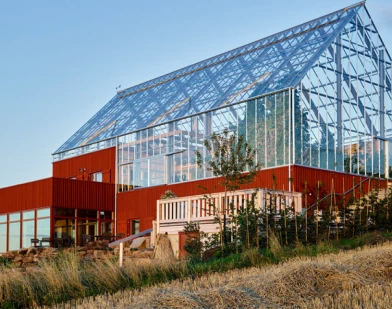
are a traditional choice that is still popular due to their aesthetic appeal and excellent light transmission.
Material properties: Greenhouses are usually made of tempered glass, which is stronger than regular glass, or special greenhouse glass. The glass allows maximum light penetration, which is important for plants that need a lot of sunlight.
Assembly and construction: Assembling glass greenhouses can be more difficult and time-consuming because the glass is heavy and requires careful handling. The frame is usually made of aluminum, steel or wood and must be strong enough to hold the glass panels.
Durability and maintenance: Tempered glass is quite weather-resistant, but it is still more fragile than polycarbonate and can break under heavy impact. Maintenance includes regular cleaning of the glass to ensure maximum light transmission.
Temperature and light control: Glass provides excellent light penetration, but has poorer thermal insulation properties than polycarbonate. This means that the greenhouse can be more expensive to heat in winter, but can quickly overheat in summer, so an effective ventilation system is required.
Application: Ideal for gardeners who value maximum light availability and the classic look of a greenhouse. Can be used to grow a wide variety of plants - from vegetables and herbs to ornamental plants.
Film greenhouses
are an economical and simple solution, popular due to their low price and easy installation.
Material properties: A special polyethylene film is usually used for the coating, which can be single or multi-layered, with UV stabilizers to extend its service life. The film is transparent to allow light to penetrate.
Assembly and construction: Film greenhouses usually have a simple frame made of metal (often pipes) or wood. The film is secured to the frame with special clips or cords. Installation is relatively quick and easy.
Durability and maintenance: Film is the least durable greenhouse covering material, especially if purchased for non-professional purposes. It can easily tear as a result of wind, hail or mechanical damage. The film should be checked regularly and, if necessary, replaced every few years. Maintenance includes cleaning the film from dust and dirt.
Temperature and light control: The film provides good light transmission, but it has poor thermal insulation properties. The temperature in a film greenhouse changes quickly depending on the outside temperature. In summer, it can overheat very quickly, but cool down quickly in winter. Effective ventilation and heating are very important. To effectively improve the thermal insulation properties, a two-layer film covering with an inflatable intermediate layer should be created.
Application: When it comes to garden greenhouses, they are suitable for short-term use or for gardeners with a limited budget. Can be used for growing seedlings in the spring, as well as in the warm months. Often used as a temporary solution or additional space.
Exception - film as a cover is often used directly in professional large-area greenhouses. But here it should be noted that they are additionally equipped with specialized automation - watering, lighting, ventilation, heating, fertilization, water collection, maintaining the pressure of the film air layer and other systems.
Professional Greenhouses:
If you are a serious plant growing enthusiast or plan to engage in commercial gardening, you may be interested in professional greenhouses. They are much larger, more durable and equipped with various additional systems, such as automatic ventilation, watering and climate control. The cost of such greenhouses is significantly higher and depends on the size and equipment.
Size and structure: Professional greenhouses are significantly larger than hobby greenhouses. They can be of various types - with a rounded roof (tunnel), with a gable roof (Venlo type), or with a flat roof (rarely found). The frame is usually made of durable, hot-dip galvanized steel or aluminum profiles, which ensure high load-bearing capacity and durability even under conditions of heavy snow and wind loads.
Covering materials: Most often, professional greenhouses use high-quality multilayer polycarbonate sheets (often with UV protection on both sides and with greater thickness) or special greenhouse glass. Durable, multilayer films with a longer service life and special anti-condensation, anti-dust, etc. coatings are also often used.
Climate control systems: One of the main differences between professional greenhouses is the integrated and automated climate control systems. These include:
- Ventilation systems: Automatic roof and side hatches that open and close depending on the temperature and humidity level. There may also be forced ventilation with a cooling function and exhaust fans.
- Heating systems: Efficient heating equipment (water heating, air blowers with gas or liquid fuel burners), which ensure a stable temperature in the cold season.
- Watering and fertilization systems: Automatic drip irrigation systems, misting equipment and fertilizer dispensers that accurately supply water and nutrients to plants.
- Lighting systems: Additional artificial lighting (suitable for LED, high-pressure sodium lamps) to provide optimal light during the dark winter months or for intensive seedling cultivation.
- Shading systems: Automatic internal or external shading systems to regulate the intensity of sunlight and prevent plants from overheating in summer. If the greenhouse is planned to be operated also in winter, shading systems can be chosen with a significant energy-saving function.
- CO2 supply systems: Sometimes used to increase the concentration of carbon dioxide and promote photosynthesis.
- Climate control computer: A central control system that controls and regulates all these systems depending on programmed parameters and external conditions.
Durability and longevity: Professional greenhouses are built to last for decades if operated correctly. The materials used are of high quality and resistant to corrosion and other external influences.
Adaptability: These greenhouses are highly adaptable to the growing requirements of various crops. They can be equipped with various tables, shelves, plant hanging systems and other specialized equipment.
Higher costs: Compared to hobby greenhouses, professional greenhouses require significantly higher initial investments in both the structure and the purchase and installation of equipment. Operating costs (heating, electricity, water) can also be significant.
Professional greenhouses are a serious investment intended for commercial gardening or very demanding hobby gardeners. They provide the best possible conditions for growing plants, but also require significant financial and knowledge resources compared to a garden greenhouse. If your goals are to grow tomatoes and cucumbers in small quantities or simply grow seedlings for your own needs, a hobby greenhouse will be the most suitable and economical solution. But if you plan to develop an existing one or start a new business in the field of gardening, nursery growing or agriculture - a maximally automated professional greenhouse will be the basis of your success.
Professional garden greenhouse
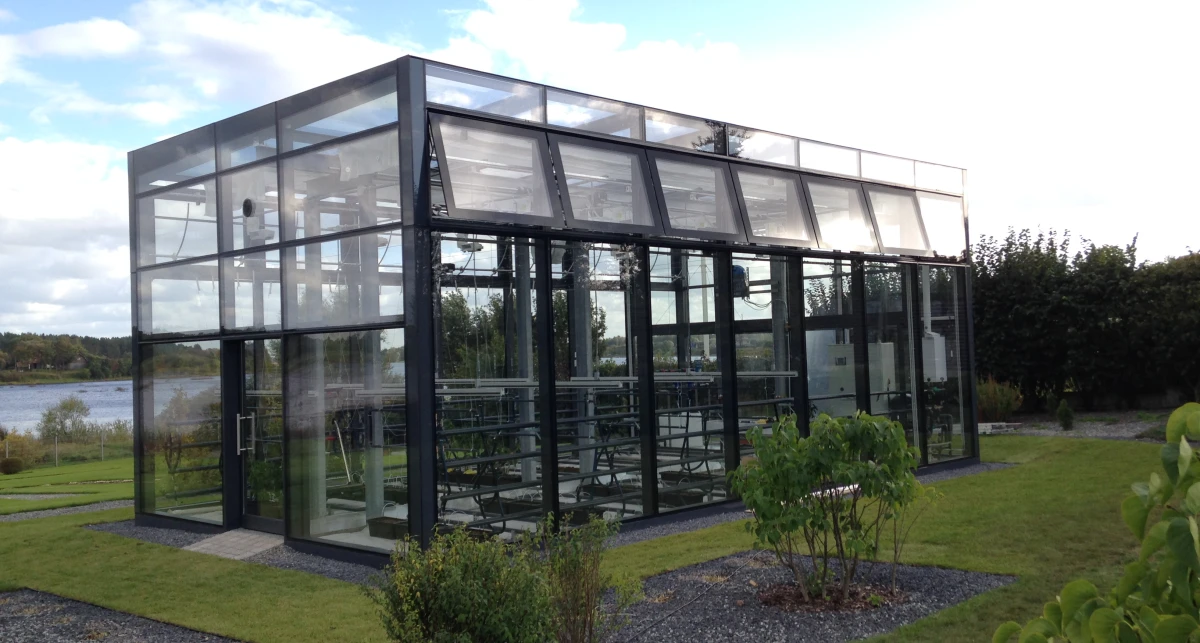
If your goal is not to create a business related to growing seedlings or gardening, but you are a garden enthusiast who cares not only about the aesthetics and design of the building, but also about automation and efficiency, a professional garden greenhouse will be what you need.
SIA TERMOLAT - professionals in the greenhouse construction and automation industry - also offers to equip garden and seedling greenhouses with various professional systems that will not only make the gardener's life easier, but also guarantee a richer harvest. Professional garden greenhouses can be equipped with the following systems:
- LED lighting;
- Specialized shelving system;
- Water supply systems/connections;
- Water circulation system;
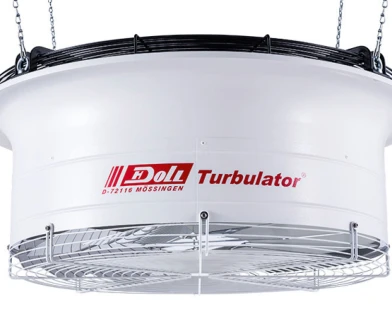
- Air recirculation system;
- Heating/cooling system;
- Floating growing tubs;
- Drip irrigation system;
- Artificial fog system;
- Irrigation water disinfection system;
- Fertilizer supply system;
- CO2 supply system;
- Rainwater collection system;
- Automation and control system suitable for the selected systems.
In conclusion:
Choosing the right garden greenhouse depends on your individual situation, budget and goals. Consider all these factors, evaluate the pros and cons of each greenhouse type, and then make an informed decision that will help you enjoy a rich harvest and fulfill your dreams of a garden enthusiast or gardening professional!
If you have any doubts or uncertainties – SIA TERMOLAT will be happy to help you find the best and most suitable solution!