
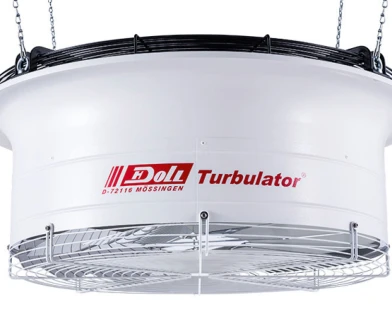
Air recirculation turbulators
In every heated or cooled space, the air is never homogeneous. Temperature, humidity and gas concentration vary both vertically and horizontally, and these differences grow the taller and larger the space is. Greenhouses, warehouses and production halls are exactly such spaces – with large volumes, high ceilings and often unevenly distributed sources of heat or moisture. Air recirculation turbulators are relatively simple and inexpensive devices whose task is to eliminate this unevenness by continuously moving and mixing the air that is already in the room. Below we look at how turbulators work, which physical processes determine their effectiveness, how they differ from other air handling equipment, and how to select and position them correctly in different types of facilities.
Read more
SIA "TERMOLAT" invites SME leaders to the LATEA seminar "Energy Efficiency as a Competitive Advantage"
Working daily on industrial objects and energy-efficient construction projects, we at "TERMOLAT" see the same pattern every single day: companies pay more for energy than necessary. Often, they do not even realize how many financial resources are wasted simply because there has been no time or sufficient information to stop and evaluate their building, equipment, and processes through the lens of energy efficiency.
Read more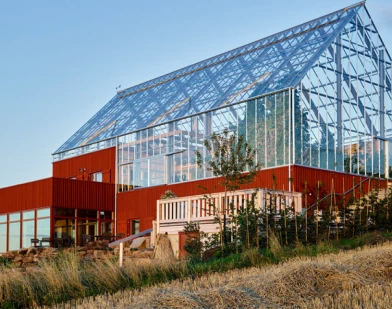
House in a Greenhouse: An Example of Sustainable Architecture and the "Naturhus" Movement in Northern Europe
"House in a greenhouse" (Swedish: naturhus, or nature house) is a scientifically grounded concept of biodynamic architecture, in which a traditional residential building is fully enclosed within a glass greenhouse shell. This solution not only reduces heating costs, but also creates a closed, self-sustaining ecosystem that transforms the home from a passive consumer of resources into an active producer of energy and food. And, as evidenced by dozens of completed projects in Scandinavia, this is not a theoretical nuance in architecture magazines - it is a viable, repeatable system with concrete numbers and proven results.
Read more
Greenhouse Shading — Why, When and How?
In industrial greenhouses, solar radiation intensity during the summer period often becomes a challenge rather than an advantage. Excessive heat and light can cause plant stress, accelerated transpiration, leaf scorch and uneven microclimates inside the greenhouse. One of the most effective and cost-efficient solutions to this problem is the use of specialised shading coatings — such as ReduSol, ReduHeat and ReduFuse.
Read more
Agri-Photovoltaic Revolution – Semi-Transparent Solar Panels
Global efforts to combine sustainable food production with climate neutrality goals have driven the rapid development of agrivoltaics, transitioning in recent years from laboratory research to large-scale commercial projects. This article focuses on semi-transparent photovoltaic (STPV) modules. This technology integrates electricity generation directly into greenhouse roof structures, transforming them into active power plants while maintaining consistently high crop yields and quality.
Read more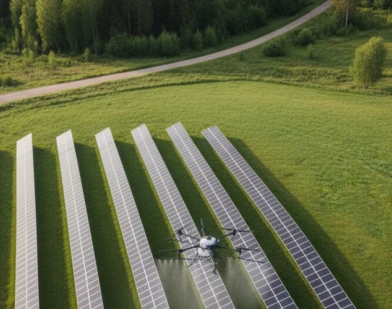
Solar park efficiency: Why is rain alone not enough?
Solar energy production is no longer a "set-it-and-forget-it" solution. As solar capacity continues to grow across Latvia, the need for professional management has become increasingly critical. Drawing on extensive experience in industrial greenhouse automation, SIA TERMOLAT is introducing a new standard in solar farm maintenance: precision treatment leveraging the DJI Agras T50 drone and the specialized VitaPanel Eco solution.
Read more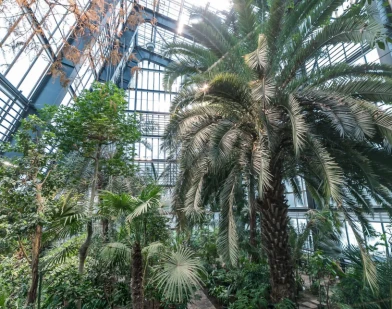
The Revival of the Palm House: Innovation and Sustainability
The Palm House, built in the last century, experienced its revival at the end of 2025. It underwent extensive renovation work, paying significant attention to the building's energy efficiency and sustainability. Now the Palm House is the most modern orangery in the Baltics.
Read more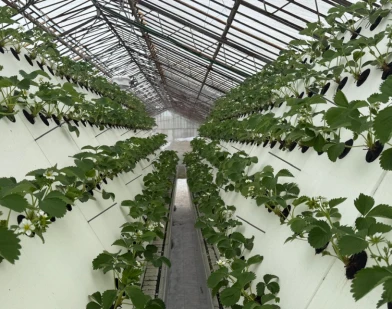
Aeroponics: the path to the agriculture of the future
Have you ever imagined growing a garden without soil, using only air, water and nutrients? It's not science fiction - it's aeroponics. At our company, we believe that this innovative method is the answer to global food challenges and the future of agriculture.
Read more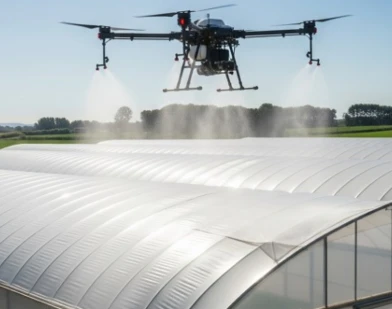
Shading of industrial greenhouses
Industrial agriculture, which relies on greenhouse cultivation, faces a constant challenge – effective light and heat management. An optimal environment is critical for healthy plant development and maximum yield. One of the main tools to ensure this is shading or the use of coverings. It is recommended to start shading as soon as the air temperature reaches an average of 25°C (of course, taking into account the specifics of the crops grown in greenhouses).
Read more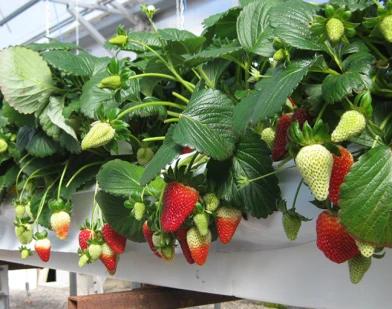
Maximum yield in minimum space
The desire for self-sufficiency and growing healthy food on your own is becoming increasingly popular. Even if you have limited space, such as a small greenhouse, there are countless opportunities to maximize your harvest using smart and innovative gardening methods. Forget about traditional bed layouts - it's time to think "vertically", about hydroponics or even about fish! In Latvia, where gardening has a long tradition, interest in efficient use of space in greenhouses has only grown. Let's look at three main methods that will help you achieve significant yields even in the smallest greenhouse: vertical gardening, hydroponics and aquaponics.
Read more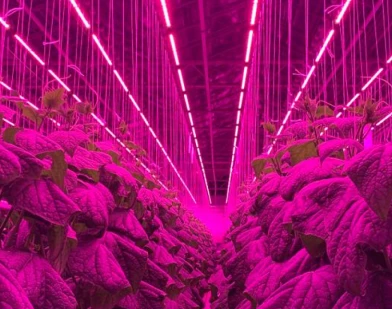
Energy-efficient greenhouse
Nowadays, when resource conservation and sustainable farming are becoming increasingly important, energy efficiency has also become an essential aspect in the greenhouse industry. Whether it is a small garden greenhouse for hobby purposes, a professional greenhouse for commercial production or even a large-scale industrial greenhouse, effective energy consumption management not only reduces operating costs, but also promotes more environmentally friendly farming practices. In this article, we will look at various energy-efficient solutions and energy-efficient systems that can help optimize energy consumption in greenhouses.
Read more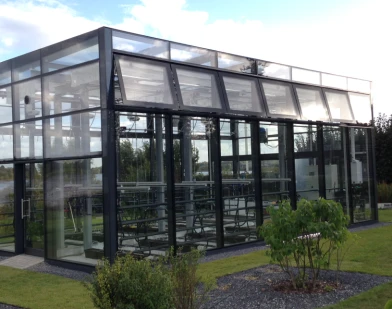
Professional garden greenhouse
Are you a gardening enthusiast who dreams of a bountiful harvest of tomatoes and cucumbers even in the coldest months? Or maybe you are a serious plant grower who wants to extend the growing season of your plants? Choosing the right garden greenhouse is the first step towards these goals. There are various greenhouse designs and materials available on the market, so it is important to understand which is right for your garden and needs. In this article, we will look at the most popular types of greenhouses, their pros and cons, as well as greenhouse automation solutions.
Read more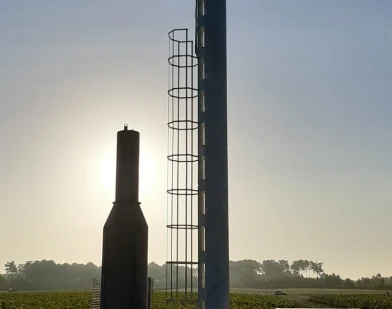
Frost protection systems
Climate change is posing increasing challenges for farmers around the world, and Latvia is no exception. Sudden frosts can destroy crops, causing significant financial losses. There are various frost protection systems available to protect your gardens and fields. In this article, we will look at the most popular and effective solutions.
Read more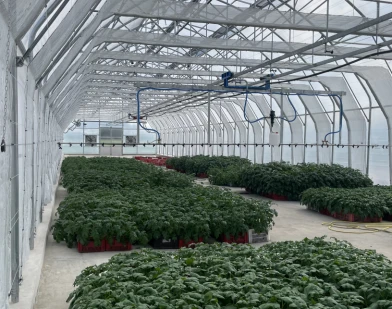
Sustainable solutions in choosing greenhouse irrigation systems
Choosing a greenhouse irrigation system is very important to ensure that your plants receive sufficient moisture and produce a bountiful harvest. When choosing a suitable irrigation system, there are several factors to consider, such as the size of your greenhouse, the type of plants, the water source, and your budget. There are many different types of greenhouse irrigation systems available, so it is important to choose one that meets your individual needs, as well as being sustainable, environmentally friendly, and ecological.
Read more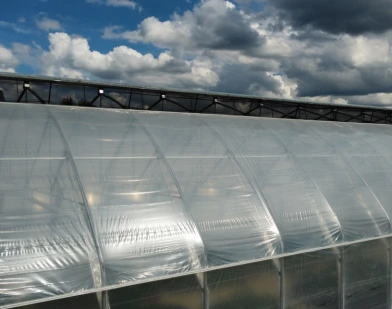
When and why should greenhouse films be changed?
Greenhouses are an indispensable tool for farmers and gardeners, allowing them to grow plants even in adverse climatic conditions. However, for a greenhouse to function effectively, it is important to change its film regularly. In this article, we will take a closer look at why changing the film is so important, how to determine the optimal replacement time, and how to choose the most suitable film.
Read more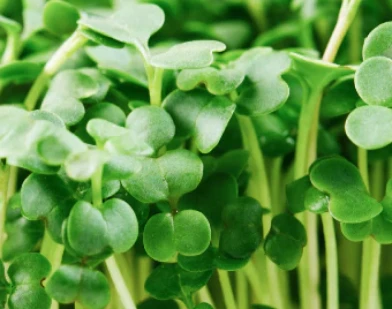
Green oasis at home: Why grow microgreens and seedlings?
Nowadays, when we spend more and more time indoors and in vehicles, the issue of a healthier lifestyle is becoming especially relevant. One way to achieve this is to create a small green oasis in your home by growing microgreens and seedlings. This activity not only brings joy and satisfaction, but is also very beneficial for both physical and mental health.
Read more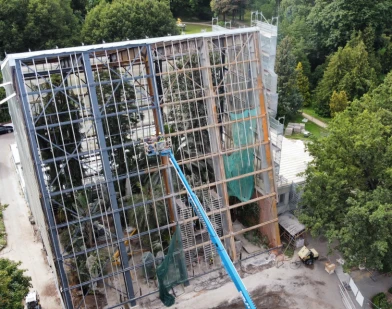
LU Botanical Garden - "Palm House"
Reconstruction, rebuilding and renovation works of the Palm House of the Botanical Garden of the University of Latvia.
Read more
About receiving support
SIA ''TERMOLAT'' concluded an agreement with LIAA on 10.05.2022 for receiving support
Read more
About the conclusion and results of the project
SIA "TERMOLAT" concluded the study "Capacitance sensors for roof monitoring"
Read more
Fourth quarter
SIA "TERMOLAT" research project "Capacitance sensors for roof monitoring" (project no. 1.2.1.1/18/A/001) investigated the following in the fourth quarter (01.2020 - 03.2020):
Read more
The third quarter
SIA "TERMOLAT" research project "Capacitance sensors for roof monitoring" (project no. 1.2.1.1/18/A/001) studied the following in the third quarter (10.2019 - 12.2019):
Read more
Second quarter
In the second quarter (07.2019 - 09.2019) of SIA "TERMOLAT" research project "Capacitance sensors for roof monitoring" (project no. 1.2.1.1/18/A/001):
Read more
First quarter
In the first quarter (04.2019 - 07.2019) of SIA "TERMOLAT" research project "Capacitance sensors for roof monitoring" (project no. 1.2.1.1/18/A/001):
Read more
Capacitance sensors for roof monitoring
From April 1, 2019, SIA "TERMOLAT" has started the research project "Capacitance sensors for roof monitoring".
Read more